Perceptions of AI voice assistants
Code and stimuli available here: GitHub
Spoken language models (SLMs) generally have three components: one that recognizes speech, one that processes it and generates a response, and one that voices the response. This study tested whether the quality of that voiced response shapes how users perceive the system.
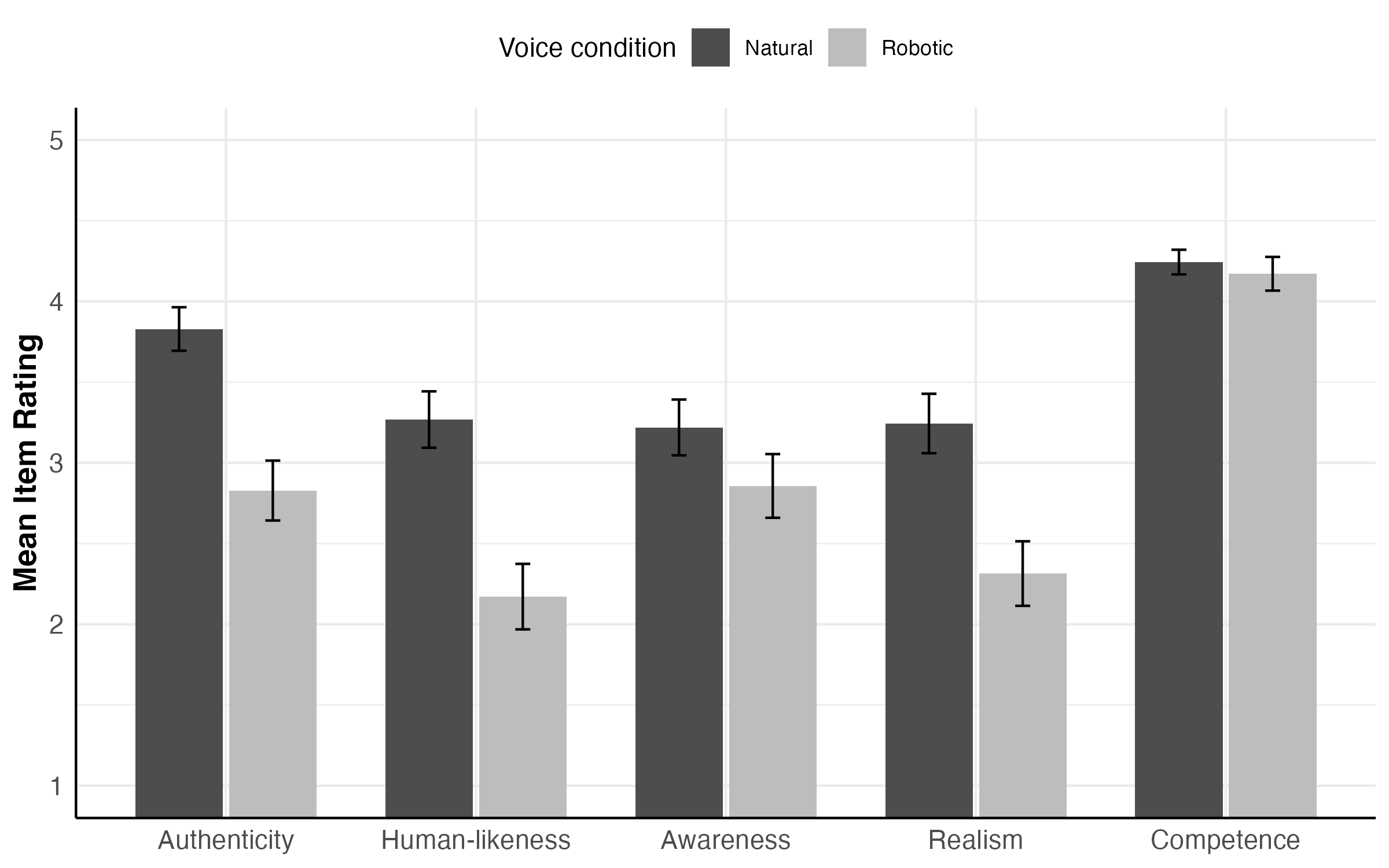
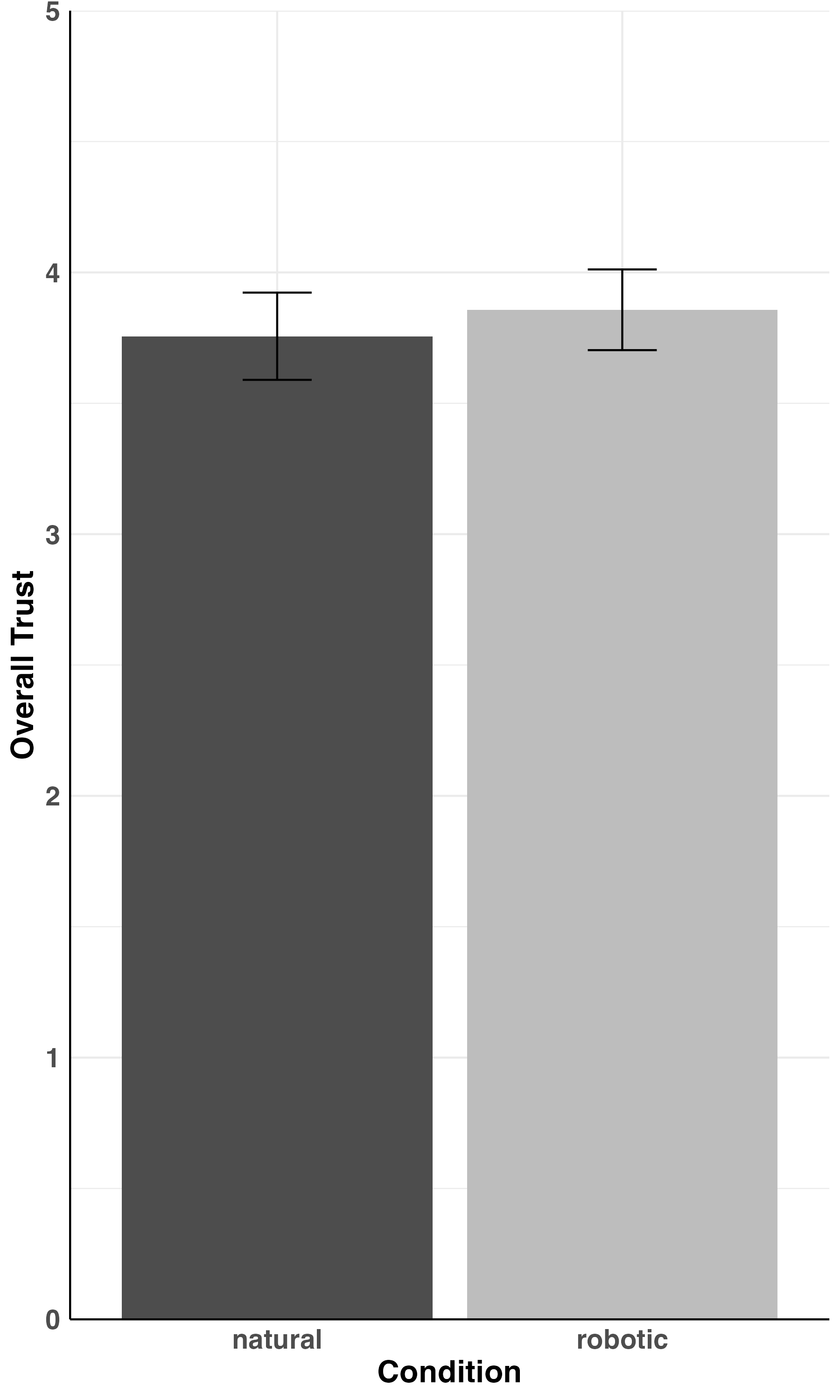
Listeners heard either a natural synthetic response or the same response processed to sound more robotic. The robotic voice received significantly lower ratings for authenticity, human-likeness, and realism, but not for awareness, competentence, or trustworthiness.
These results suggest that voice quality influences how socially human-like a system seems, but is not necessarily what drives perceptions of its competence or trustworthiness.
Listen for yourself
Natural Response
Robotic Response
Both samples are the same generated response from an SLM. The robotic version is passed through 110 Hz amplitude modulation and has added noise.
I collaborated on this project with Michelle Cohn (UC Davis).